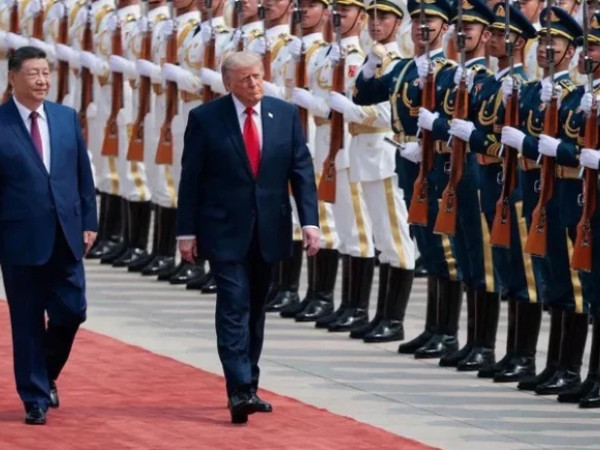


China agreed to buy at least $17 billion worth of American farm products each year through 2028 during a recent meeting in Beijing between U.S. President Donald Trump and Chinese President Xi Jinping in Beijing, a White House fact sheet showed Sunday.
The document lacked reference to Taiwan, a self-ruled democracy that Beijing claims as its own. During the two-day summit that ended Friday, Xi warned of a potential conflict between the world's two most powerful nations if the issue was mishandled.
The absence of any mention of the island apparently indicated that significant differences remained on the matter.
The fact sheet also said the two countries confirmed their "shared goal" of denuclearizing North Korea and oppose any charging of tolls in the Strait of Hormuz, a critical energy chokepoint that has been effectively closed amid the ongoing U.S.-Israeli war against Iran.
Trump and Xi agreed that Tehran cannot possess nuclear weapons and called for the reopening of the Strait of Hormuz. The United States expected China, which has close ties with Iran, to use its influence to help end the conflict in the Middle East. But the paper did not include Beijing's specific cooperation measures.
In addition to its commitment to buying U.S. agricultural products, China also approved an initial purchase of 200 U.S.-made Boeing aircraft for Chinese airlines. The commercial deals, which had been requested by Washington, could help Trump ahead of the midterm elections in November.
The countries established two new institutions -- the Board of Trade and the Board of Investment -- to optimize the bilateral economic relationship.
The former will allow the two governments to manage bilateral trade across non-sensitive goods, while the latter will provide a government-to-government forum for the discussion of investment-related issues.
China will address U.S. concerns regarding supply chain shortages related to rare earths and other critical minerals as well as restrictions on the sale of rare earth production and processing equipment and technologies, according to the fact sheet.
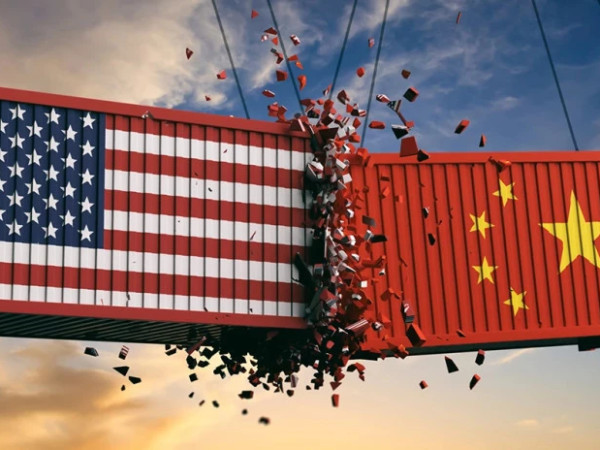
Trump and Xi agreed to a one-year truce in the countries' trade war when they met last October in South Korea, easing tensions after their respective tariffs temporarily soared to triple-digit levels.
That agreement also included a delay in China's new export controls for rare earth minerals that are essential for manufacturing high-tech products and Beijing's commitment to purchase at least 25 million tons of U.S. soybeans per year from 2026 to 2028.
The Chinese Commerce Ministry said Saturday the two sides had agreed in principle to lower tariffs on products of respective concern on an equivalent scale, as well as to work toward resolving non-tariff barriers and market issues involving certain agricultural products.
According to the two countries, Beijing will work with U.S. regulators to lift all suspensions of American beef facilities and resume imports of poultry from U.S. states that are free of highly pathogenic avian influenza.
Regarding Sino-U.S. relations, Trump and Xi agreed that their countries should establish a "constructive relationship of strategic stability" based on fairness and reciprocity.
Trump will welcome Xi for a visit to Washington this fall and the two countries will support each other as the respective hosts of the Group of 20 and the Asia-Pacific Economic Cooperation forum summits to be held later this year, the fact sheet said.
Meanwhile, Trump on Sunday held telephone talks with South Korean President Lee Jae Myung to share the outcome of his meeting with Xi, according to Lee's office.
Lee expressed his appreciation for the constructive discussions between Trump and Xi regarding the Korean Peninsula. The U.S. leader pledged to continue playing a necessary role in promoting peace and stability on the peninsula.