

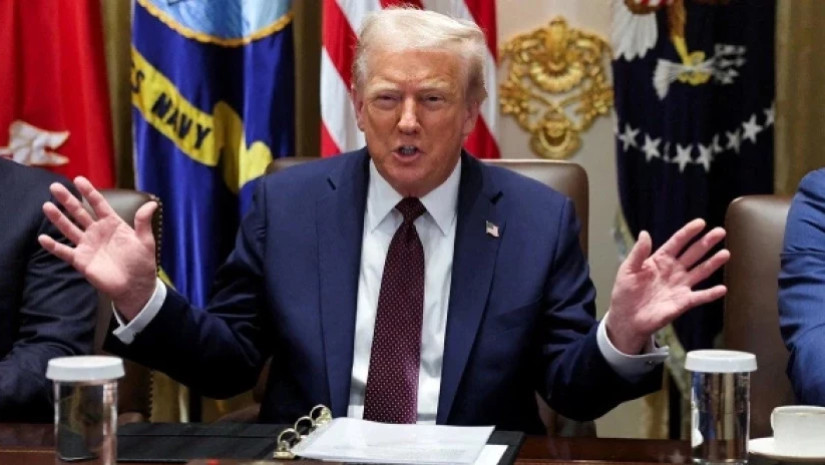
President Donald Trump on Thursday signed an order aimed at accelerating the process of changing the classification of marijuana to be considered a less harsh drug on the federal level, a move he long teased and one his Democratic predecessor also looked to facilitate.
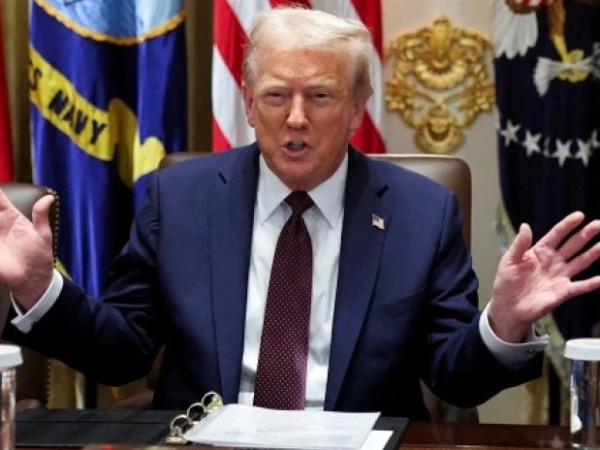
Trump signed the order in an Oval Office ceremony alongside his Health and Human Services Secretary Robert F. Kennedy Jr., Centers for Medicare & Medicaid Administrator Dr. Mehmet Oz and what was described by a senior administration official as an “array of stakeholders” benefiting from the action, including those involved in the medical and law enforcement professions and disability advocates.
Specifically, the order directs the attorney general to “expedite” the process of officially moving marijuana from its current classification by the U.S. Drug Enforcement Administration of Schedule I to Schedule III instead. It also looks to make CBD products more accessible to address pain by having the White House work with Congress to reconsider its classification. The Department of Health and Human Services will also strengthen research on hemp-derived cannabinoid products as part of the order.
The “primary goal” of the move, a senior administration official told reporters on a call ahead of the signing, is to enable improved research on medical marijuana and CBD “to better inform patients and doctors.”
Trump reiterated such a point in the Oval Office, saying the reclassification will make it “far easier to conduct marijuana-related medical research, allowing us to study benefits, potential dangers and future treatments.”
But he also stressed the potential direct impact on “American patients suffering from extreme pain” from ailments such as incurable diseases, aggressive cancers and more, declaring it will help them live a “far better life.”
The president also noted the popularity of the move in polls. A recent one from Gallup showed 64% of adults this year said they support it being legal — while adding that people were “begging” for him to make the move.
The poll from Gallup, however, did note the 64% this year was a decrease from the 68% it found supporting legalization last year and 70% in 2023.
And at the same time, Trump emphasized the order does not legalize marijuana on the federal level “in any way, shape or form” and does not sanction its use as a recreational drug.
“Unless a drug is recommended by a doctor for medical reasons, just don't do it,” Trump said.
Two dozen states, along with two territories and Washington, D.C., have already legalized small amounts of the drug for recreational use by adults, according to the National Conference of State Legislatures, which also notes that more than a half dozen have decriminalized it.
The DEA puts drugs and certain chemicals used to make them in one of five categories, known as schedules, based on their level of acceptable medical use and the risk that someone could abuse or become dependent on it.
Currently, marijuana, or cannabis, is in what is considered to be the harshest category, Schedule I, which is defined as “drugs with no currently accepted medical use and a high potential for abuse.” Among its ranks in the category is heroin, LSD and ecstasy.