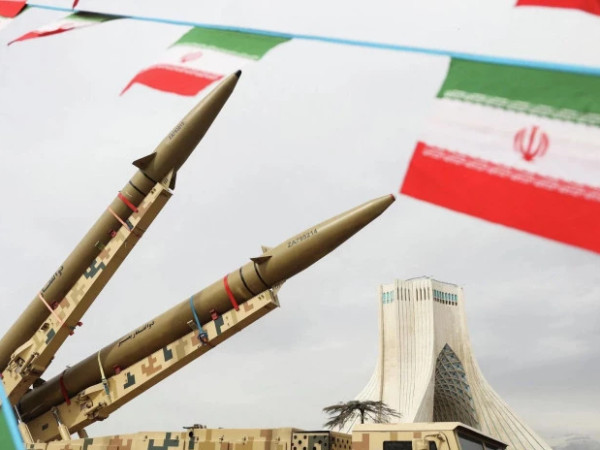


Current buildup falls short of Desert Storm and Iraqi Freedom scales but includes two carriers, 100+ fighters, and missile defense systems targeting Iran's nuclear and ballistic capabilities
By the 18th, the U.S. had already pre-deployed a significant number of fighter jets and support aircraft around Iran.
Flight tracking data shows that over recent days, the U.S. Air Force has sent dozens of military aircraft, including F-35, F-15, and F-16 fighters, E-3 airborne early warning and control system (AWACS) aircraft, and E-11 battlefield airborne communication relay aircraft, to Jordan’s Muwaffaq Salti Air Base and Saudi Arabia. The U.S. media outlet Axios reported that “more than 50 of these fighters departed for the region over the past 24 hours.” Additionally, military transport aircraft loaded with weapons and ammunition have made more than 150 supply runs to the region.
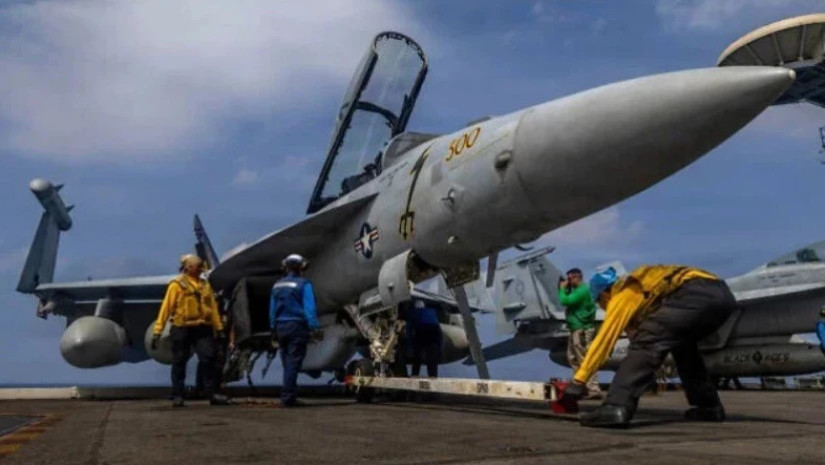
Around the weekend, following the USS Abraham Lincoln (CVN-72, Nimitz-class) in the Persian Gulf, the U.S.’s newest aircraft carrier, the USS Gerald R. Ford (CVN-78, Ford-class), will also be deployed to waters near Israel in the Mediterranean. Each carrier typically carries around 40–45 F/A-18E/F fighters, EA-18G electronic warfare aircraft, and E-2D early warning aircraft, totaling approximately 80 aircraft. Additionally, 13 destroyers capable of intercepting ballistic missiles accompany the two carriers. Ground-based interception systems to counter Iran’s potential ballistic missile retaliation, numbering over 2,000 units, have also arrived in the region.
This marks the largest concentration of U.S. air power in the Middle East since the March 2003 invasion of Iraq.
However, in terms of scale, it falls far short of the military forces mobilized during the 1991 “Desert Storm” operation to repel Iraq’s invasion of Kuwait or the March 2003 “Iraqi Freedom” operation that ousted President Saddam Hussein.
Of course, both operations were large-scale wars involving 450,000 and 150,000 ground troops (including Marines), respectively. The “Desert Storm” operation, a full-scale war centered on heavy armored divisions, took seven months to assemble forces but repelled Iraqi forces in a 100-hour ground war.
In contrast, the “Iraqi Freedom” operation succeeded in capturing Baghdad within three weeks but resulted in 4,431 U.S. troop deaths and over 31,900 wounded by the war’s official end on December 18, 2011. In Iraq, which had a population of 25 million at the time, over 200,000 people died by the war’s conclusion.
Six carrier strike groups were deployed for both the “Desert Storm” and “Iraqi Freedom” operations. Prior to these operations, the U.S. Air Force pre-deployed entire combat wings (48–72 aircraft) rather than squadrons (18–24 aircraft).