

Europe has warned that trade deals struck with the U.S. could now be at risk after President Donald Trump unveiled a new global 15% tariff on all imports at the weekend.
Trump’s move came after the U.S. Supreme Court on Friday struck down his global tariffs policy, implemented last spring, that had upset the long-standing global trading order.
The president reacted to the Supreme Court’s judgment by initially announcing a new universal 10% levy, using a different legal framework for the latest tariffs, but then increased the global tariff rate to 15% — the legal maximum which can be in place for 150 days before Congressional approval is required.
The new import duties are “effective immediately,” Trump said in a Truth Social post on Saturday.
Officials in Europe and London expressed alarm and consternation at the latest upheaval in global trade relations, saying Trump’s new tariff policy could upend trade deals signed with the U.S. last year.
They asked for more clarity from the White House as to what the new tariff policy framework means in practice for their respective trade deals, which saw most EU exports to the States hit with a 15% duty, and those from the U.K. slapped with a 10% levy.
“Pure tariff chaos from the U.S. administration,” the Chair of the European Parliament’s committee on International Trade, Bernd Lange, reacted to the White House on Sunday.
“No one can make sense of it anymore — only open questions and growing uncertainty for the EU and other U.S. trading partners,” Lange wrote on social media platform X.
“Do new tariffs ... not constitute a breach of the deal? Regardless, no one knows whether the US will adhere to it – or even be able to,” Lange said, adding that “clarity and legal certainty are needed before any further steps are taken.”
The European Parliament’s trade committee is due to hold an emergency meeting on Monday to discuss Trump’s latest trade move, and Lange said he’ll propose suspending the implementation of the U.S.-EU trade deal until the bloc has “a comprehensive legal assessment and clear commitments from the U.S” regarding the latest tariffs.
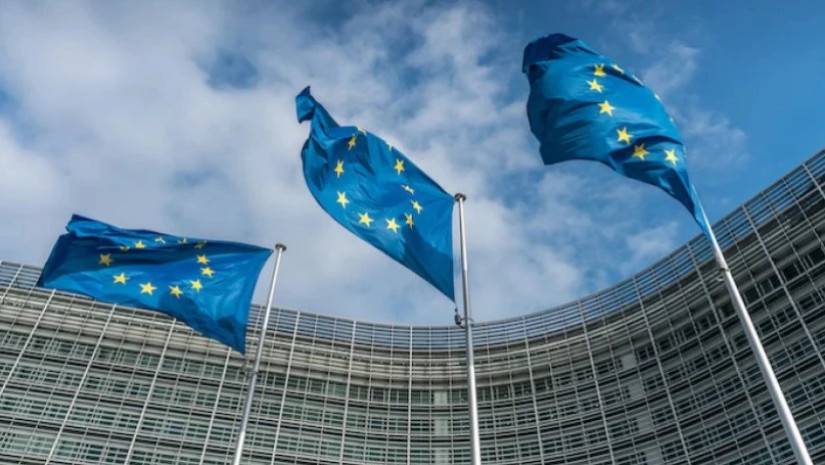
The European Commission issued a statement Sunday noting that “a deal is a deal” and that it expected the U.S. “to honour its commitments ... just as the EU stands by its commitments.” CNBC has asked the Commission for further comment.
German Chancellor Friedrich Merz told German broadcaster ARD that there would be “a very clear European position on this” ahead of his visit to the White House in early March, but he deferred to the European Commission in Brussels as to how the EU would respond to the tariffs.
However, French Trade Minister Nicolas Forissier suggested that Brussels could hit back at Washington. Speaking to the Financial Times, Forissier urged EU members to “be naive” and to adopt a united approach against the White House’s new trade position.
The U.K. has also questioned how the new tariff policy will affect its trade deal with the States, which, given its baseline 10% tariff rate, had put the country at a competitive advantage to its European neighbors.
“Under any scenario, we expect our privileged trading position with the U.S. to continue and will work with the administration to understand how the ruling will affect tariffs for the U.K. and the rest of the world,” a U.K. government spokesperson said at the weekend.