


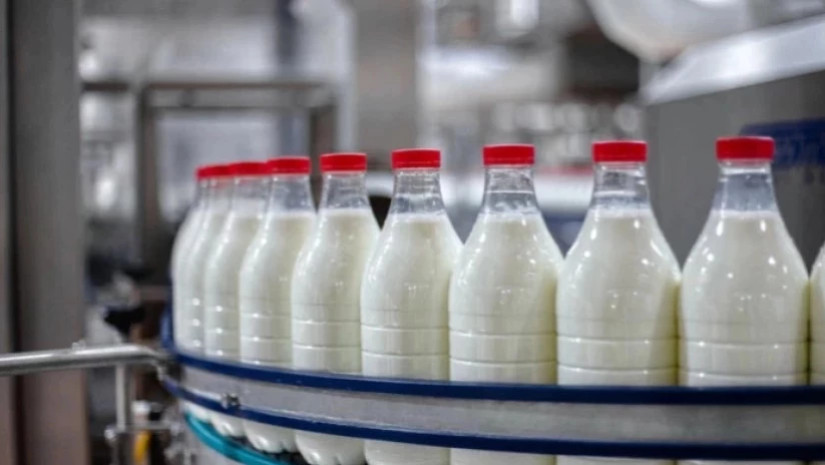
"Georgia faces a milk deficit of about 70%, covered by increasing annual volume of powdered milk and ready-made products," Nikoloz Beniaidze, Chairman the Association of Commercial Milk Producers, told "Commersant" radio.
Official data reveals a sharp rise in Georgia's milk imports. Imports grew from 7,500 tons in 2019 to 16,000 tons in the first 10 months of 2025, primarily due to increased imports from Poland, France, Russia, and Belarus.
Nikoloz Beniaidze points out that the country's cattle numbers are going down each year, and at the same time, milk production volume is also declining.
"There are many reasons for this. One of the main ones is the uncompetitiveness of local production. I mean, cheap powdered milk is imported at dumping prices. Some countries have significant support and a surplus of milk, which is then imported in the form of powdered milk into countries like ours. "As a result, local production has become more expensive because everything has gone up in price. For milk production, in particular, we need high-yield livestock, which previously cost up to 2000 euros and now surpasses 3000 euros ," explains Nikoloz Beniaidze.
He speaks about a government-developed program that provides funding for new farms worth up to 5-10 million. However, a new challenge is the sharp rise in prices – highly productive livestock has become very expensive, even in Europe. Furthermore, diseases, particularly Turkish ones, have added to the overall situation, leading to a decline in livestock productivity both in Georgia and in other countries.