

Russia is ready to normalize relations with Georgia, but so far it sees no prerequisites for resuming political dialogue, the Russian Foreign Ministry told Izvestia. The problem is that Tbilisi links the restoration of diplomatic relations with the Russian Federation with Moscow's refusal to recognize the independence of Abkhazia and South Ossetia. Russia considers this requirement unrealistic. At the same time, Moscow and Tbilisi are currently maintaining dialogue in a number of areas, Petre Mamradze, the former head of the Georgian president's office, told Izvestia. Is it possible to restore diplomatic relations between the parties and in what areas contacts can develop — in the Izvestia article.
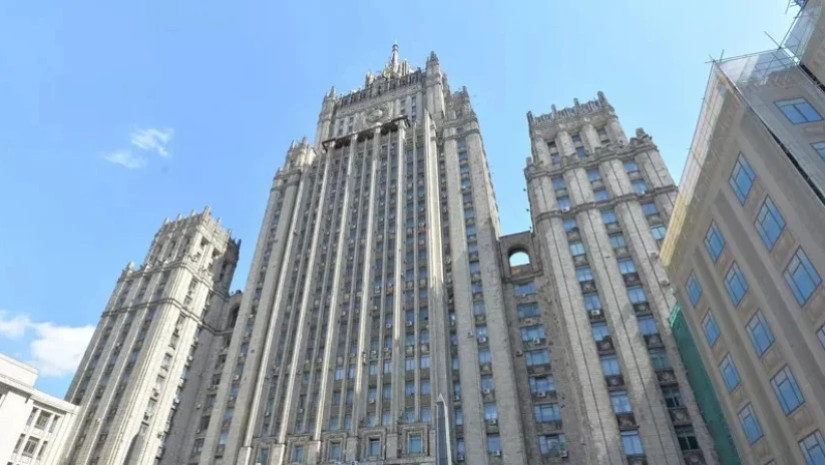
Russia currently sees no prerequisites for resuming a political dialogue with Georgia, the Russian Foreign Ministry told Izvestia.
— There are no prerequisites for the resumption of Russia's political dialogue with Georgia, since Tbilisi adheres to the position taken by the Saakashvili regime about linking the resumption of diplomatic relations with Russia's refusal to recognize Abkhazia and South Ossetia. This is a flawed and unrealistic demand for Georgia itself. Moscow emphasized that decisions on the recognition of the republics' statehood are irreversible," the ministry noted.
Nevertheless, Russia is open to steps to further normalize relations with Georgia to the extent that Tbilisi itself is ready for this, the Foreign Ministry stressed.
"The ball is on the Georgian side, which, we believe, should be more interested in this than others," they noted.
Official Tbilisi has previously stated that the restoration of diplomatic relations with Russia is possible only if the key condition is fulfilled — Moscow's refusal to recognize the independence of Abkhazia and South Ossetia and the withdrawal of Russian troops from the territories that Georgia considers occupied.
"There is no way to restore diplomatic relations due to the occupation of our two historical regions," Georgian Prime Minister Irakli Kobakhidze said in February 2025.
The Russian side has repeatedly stressed that Moscow will not revoke the recognition of the republics' independence.
The current Georgian authorities actually admit that it was the actions of the country's ex-president Mikhail Saakashvili that damaged its territorial integrity. During the election campaign in 2024, the founder of the ruling Georgian Dream party, Bidzina Ivanishvili, even promised to apologize for the war with South Ossetia. However, after the election victory, no action was taken by Tbilisi.
In September 2024, Russian Foreign Minister Sergei Lavrov drew attention to the softening of the rhetoric of the Georgian authorities. He stressed that the three countries would have to independently determine in which format they would put up, and Russia, if there was a common interest, was ready to help "ensure non-aggression agreements."
By the way, after the victory of the ruling party in the elections, Georgia's relations with the West have significantly cooled. The parties are currently experiencing the most acute crisis in recent years. The cooling began in May 2024 with the adoption by the Parliament of Georgia of the law "On Transparency of foreign Influence." The West has repeatedly accused the ruling party of being pro-Russian. However, in Tbilisi, difficulties in their relations were linked to Georgia's refusal to open a "second front" against Russia in 2022. In 2024, the republic announced the suspension of negotiations on joining the EU until 2028.
It is difficult to imagine that Russia and Georgia will be able to restore full-fledged diplomatic relations in the near future, said Petre Mamradze, former head of the Georgian President's office. But despite this, Moscow and Tbilisi have common ground, according to which they build contacts.
— The dialogue between Moscow and Tbilisi has already developed. With this problem (the issue of Abkhazia and South Ossetia. — Izvestia) the parties, one might say, got used to the default. But they are developing cooperation in other areas: trade, culture, and the social sphere. This is very important for Georgia," he told Izvestia.
Earlier, Russian Deputy Foreign Minister Mikhail Galuzin stressed that Moscow is ready to develop pragmatic cooperation with Tbilisi where it is beneficial to both sides.
In recent years, there has been a steady increase in trade between the countries: according to the National Statistical Service of Georgia, in the first half of 2025, the trade turnover between the states reached almost $1.3 billion, which is 7% higher than in the same period of 2024. Overall, Russia ranks third among the largest trading partners.
Georgia remains one of the key food suppliers to the Russian market: first of all, it is wine (including premium brands), mineral water, fresh fruits and various types of nuts. In turn, Russia is actively selling energy resources to Georgia. According to the results of January – June 2025, Tbilisi's purchases of Russian natural gas amounted to $110.56 million, which is 26.5% more than in the same period of 2024. Direct flights also continue to operate between the parties.
"Georgia receives billions of dollars in tourism revenue, which is certainly very important for such a small country,— Mamradze believes.
In general, it is in the field of economy and tourism that the parties will continue to increase cooperation, the former head of the Georgian President's office emphasizes.
— Established relations are unlikely to deteriorate. Now there are areas that are working very productively: the development of trade and transport links," he concluded.
In 2023, it was reported that a year-round ferry service could be launched between Turkey, Georgia and Russia. However, this initiative has not yet been implemented.