


"Work of flour mills is gradually restored" - the executive director of the Wheat and Flour Producers Association of Georgia Levan Silagava says.
According to Levan Silagava, the imported flour available on the market is gradually sold to bakeries, but in unison we purchase grain to be processed at local flour mills.
“The recovery will gradually gain momentum, wheat will be brought in stages. The process can be divided into two parts - the old and the new crop. The old crop was low-quality wheat, as it was stored for a long time that created some problems. The second stage envisages getting a new crop,” Levan Silagava notes.
In his words, the mills have taken responsibility, regardless of whether they are members of the Association, to buy grain from local farmers.
Prices for purchased grain range within 50-55 tetri depending on the regions, in Kakheti where grain is mainly grown, its price is set at 65-70 tetri.
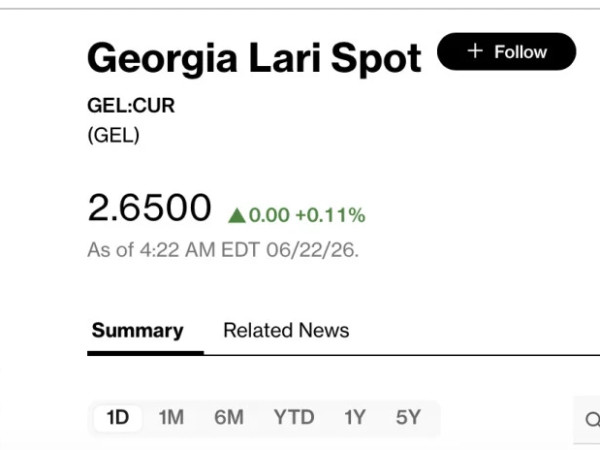
One ton of wheat costs GEL 650.
Due to the current situation in the world, the industry is facing a huge challenge, as Silagava says. Russia and Ukraine are the largest wheat suppliers who affect the formation of price.
“A volume of wheat grown in Georgia has not yet been calculated considering harvesting has just begun in several regions. Anyway, all grain grown in Georgia will be purchased by the local mills. We have commitments on bread prices that will be met and no changes are expected ,” Levan Silagava explains.
He believes that the duty imposed by the government on flour imports is not aimed at limiting competition - it is a fee to balance the situation. As reported, Russia- the main grain supplier to Georgia introduced grain export export tax, but left the cost of flour exports unchanged causing an increase in grain prices. As a result, flour purchase became more profitable than grain imports and its processing.
All this has become the reason for closing most of the mills, to improve the situation the import duty on flour was introduced.