

"We intend to establish a production line for nectar-bearing plants," Aleko Papava, head of the Beekeepers' Union, states.
According to him, beekeeping is largely dependent on the weather.Industry representatives are actively trying to minimize this dependence. Our goal is to create a system that provides bees with a continuous food source throughout the entire season.
All our work is aimed at creating a conveyor belt of honey plants," he explained. "This means strategically planting and managing a variety of nectar-producing plants so that there's always something in bloom for the bees, regardless of natural fluctuations. But state’s involvement in this process is necessary," he emphasized. Beekeepers alone will not be able to solve this problem."
In his estimation, it is crucial to prioritize the cultivation of nectar plants and the installation of windbreaks around relevant crops. Papava posits that these actions will positively influence both beekeeping and the agricultural sector as a whole.
In his words, bee pollination is vital for both apple orchards and other agricultural crops, as it increases yields and improves product quality.
Aleko Papava points out that they are still in communication with the government on these topics, though the concepts aren't entirely solidified yet.
"Everyone's looking for results, but the state needs to dedicate more focus to this field," he notes.
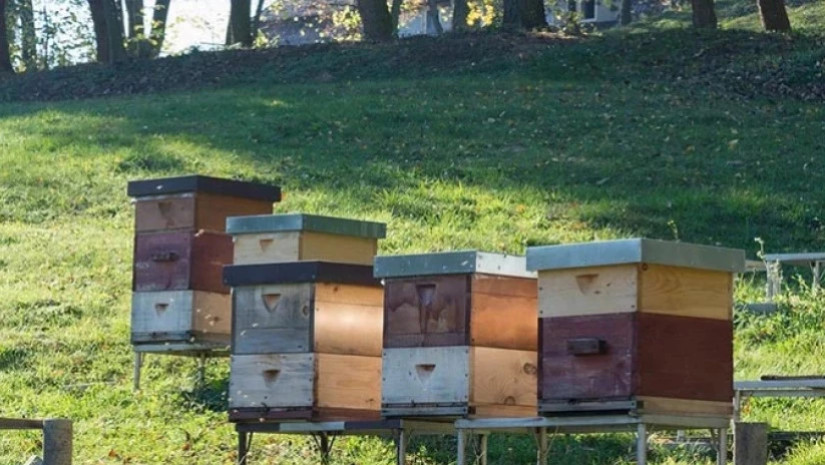
The Beekeepers' Union is set to launch a project to establish conveyor systems for honey collection on plantations in western and eastern Georgia. The focus will be on almond, apple, pear, and walnut orchards, crucial for full harvests due to their reliance on bee pollination.