


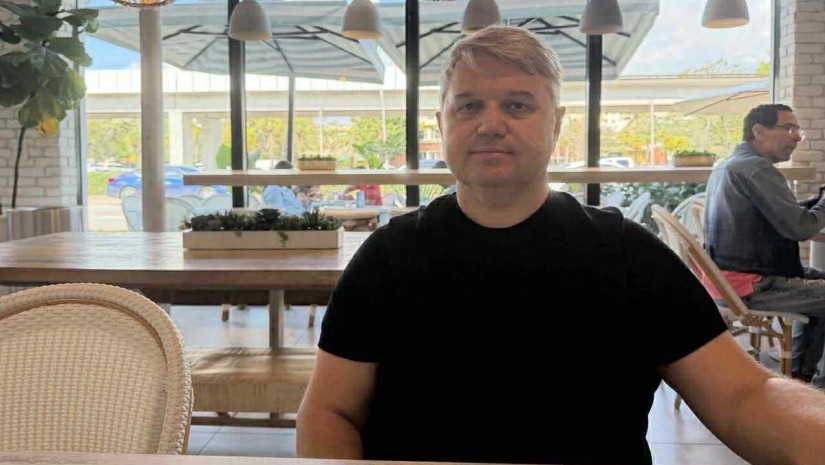
Viacheslav Prokudin oversees 11 Dodo Pizza restaurants in Russia and 4 in Georgia. The fifth pizzeria is opening now and each stage begins with pre-defined revenue targets, trained local staff, and consistent adherence to a proprietary location analysis methodology.
In 2025, Georgia reached record levels in terms of tourism revenue. According to international industry surveys, the country's tourism sector has generated more than $4.4 billion, and the growth in spending by foreign visitors has become noticeable primarily in the segments of HoReCa, urban services, and food delivery. Tourism is becoming less of a seasonal phenomenon and is increasingly generating steady consumer demand, especially in Tbilisi and Batumi, where international flows are concentrated.
At the same time, Georgia remains a country with one of the strongest culinary identities in the world. Georgian cuisine is deeply embedded in everyday life, built around hospitality. This creates an especially demanding food environment, where new restaurants compete with home cooking and long-established culinary traditions.
For the restaurant market, this means a qualitative change in conditions. The guest is becoming more demanding on the speed of service, digital experience, predictability of quality, and an understandable format. In such an environment, it is not individual concepts that win, but networks that can scale standards and simultaneously adapt to local audience behavior. In this context, Dodo Pizza is developing in Georgia today, under the management of Viacheslav Prokudin, master franchisee of Dodo Pizza in Georgia & CEO at Vitagold LLC. Under his leadership, more than a dozen pizzerias were opened, the most profitable of which is now operating in Batumi.
The beginning in Moscow as a management foundation
Viacheslav’s history of Dodo Pizza development in Georgia begins long before entering this market. The management approach, which is being transferred to Tbilisi and Batumi today, was formed by Viacheslav in Moscow and the near region, one of the most competitive restaurant markets in Russia. Here, high network density, expensive rentals, and a sensitive audience quickly identify weaknesses in any business model. It was here that Viacheslav Prokudin, CEO of Vitagold LLC (known under the Dodo Pizza brand), formed a management system in which growth was the result of processes and important decisions.
Under Prokudin’s leadership, a chain of 11 pizzerias with a stable economy was built in Moscow and the Moscow region: the average monthly revenue per location reached about $160,000, one pizzeria became the revenue leader in the Moscow network with up to $230,000 per month, and total annual orders exceeded 1 million. In 2022, one of his restaurants received an award at the Dodo Pizza Partners convention for the fastest delivery in the region.
Under Prokudin’s leadership, a chain of 11 pizzerias with a stable economy was built in Moscow and the Moscow region: the average monthly revenue of one point reached about $160.000, one of the pizzerias became the leader in revenue in the Moscow network with up to $230,000 per month, and total annual orders exceeded 1 million. In 2022, one of his restaurants received an award at the Dodo Pizza Partners convention for the fastest delivery in the region.
“Moscow and the Moscow Region are dense, complex markets for development. Nevertheless, pizzerias there turned out to be among the most successful. That experience shaped our approach: today, we treat each new restaurant as a calculated operational project, whether in Russia or Georgia. This is the logic we are now scaling further,” Viacheslav shared.
Operating in such a competitive environment forced the team to build strict financial control, analytics, and operational management systems, where results were measured daily and deviations were immediately visible in numbers. This disciplined approach became the foundation for scaling beyond Russia, proving that the model could function not only in a familiar market, but in a fundamentally new context.
Expansion in Georgia as a test of system maturity
When the network entered Georgia, the first challenge was obvious: the brand was practically unknown in a country with one of the strongest culinary identities in the world. Georgian cuisine is deeply embedded in everyday life, built around hospitality and dishes such as khachapuri and khinkali, which set a high standard for taste and quality. Entering such a market required more than a strong brand – it required precise adaptation. Against this backdrop, the Georgian case under Viacheslav Prokudin’s leadership is particularly revealing. In more international food environments such as China and the UAE, franchise projects of the chain managed by other teams failed to achieve sustainable results. Georgia, initially viewed by many experts as a risky market for pizzerias, instead became an example of stable growth, highlighting Prokudin’s ability to compete within a strong culinary culture rather than against it.
Prokudin applied a proven logic: first test the model at one location, then scale only after confirming the economics. The first restaurant opened in Batumi about a year and a half ago, on the embankment with high tourist and local traffic. The project took one month to design and four months to build, fully aligned with chain standards. A supply system was established using both Russian and Georgian ingredients, with logistics secured through East West Logistics, which also serves KFC and Burger King. The result validated the strategy: first-month revenue reached $170,000, the highest starting figure among 240 Dodo Pizza restaurants outside Russia, with break-even achieved in the first month and the location remaining in the chain’s top 10 performers.
“To launch in Georgia, we conducted a market analysis: a study of the needs of the Georgian consumer and competition. The locations were chosen in the center of Tbilisi and on the embankment in Batumi, with high tourist and local traffic, in order to attract attention to the establishments and increase revenue. We were also attentive in the matter of recruiting a team. The training of the franchisee management team in Russia was conducted, and the recruitment and training of local staff were organized,” Prokudin shared.
The second pizzeria opened in central Tbilisi with high pedestrian and transport flow, supported by a localized marketing strategy based on social media, local influencers, and launch mechanics such as “Pizza Day” 1+1 offers. All Georgian locations were immediately integrated into the overall management system through Dodo IS CRM, combined with Plan-Fact and 1C accounting, automating up to 90% of management processes and enabling near real-time analytics.
In parallel, the HR infrastructure was being built: each point was launched with a team of about 20 employees, for whom its own HR methodology was immediately applied, including an “Adaptation Passport” and a mentoring system. The adaptation passport records the achievements of employees in the first 30 days of work to track personal results. In addition, the first week of each employee is an internship in a certain position in order to get comfortable in a new place. As a result, Viacheslav managed to build a system in which 90% of employees successfully passed the probation period, and staff turnover in the early stages was only 10%.
This approach allowed Viacheslav to consider further development in Georgia not as an experiment, but as a scalable business, where each new discovery is a continuation of an already proven model.
Strategies for choosing new locations
The current development of Dodo Pizza in Georgia is structured as a managed cycle, where each new opening generates data for the next decision, under the leadership of Viacheslav Prokudin. Two new pizzerias have already opened in Tbilisi, and the fifth Georgian location is scheduled to launch in the first quarter of this year. All projects are treated as parts of a unified system rather than standalone businesses.
This approach is built on an analytical model developed by Prokudin and his team, used not only for location selection but throughout the restaurant lifecycle. Based on a hierarchical analysis – from urban structure and demand distribution to specific premises – the model integrates multiple data layers, including demographics, infrastructure, delivery activity, and performance of existing restaurants. Heatmaps are applied as indicators of operational load rather than superficial traffic, helping avoid overestimating tourist zones.
In this context, Viacheslav’s history of Dodo Pizza development in Georgia is becoming an example of international expansion and how the modern chain restaurant business is no longer intuitive and is increasingly becoming a managed solution system. The experience gained by Viacheslav Prokudin in Moscow – from working with millions of orders to building marketing, HR architecture, and analytics – was not transferred to Georgia in a ready-made form, but transformed into a flexible model sensitive to the local market. In the face of growing tourist demand and increasing competition, his approach allows the network both to open in a new country and gain a foothold in it for a long time, while maintaining control over quality, economy and development. The Georgian Dodo Pizza project under Prokudin’s management today shows that scaling is not about speed or quantity, but about the ability to learn from every discovery and turn growth into a source of managerial advantage.