

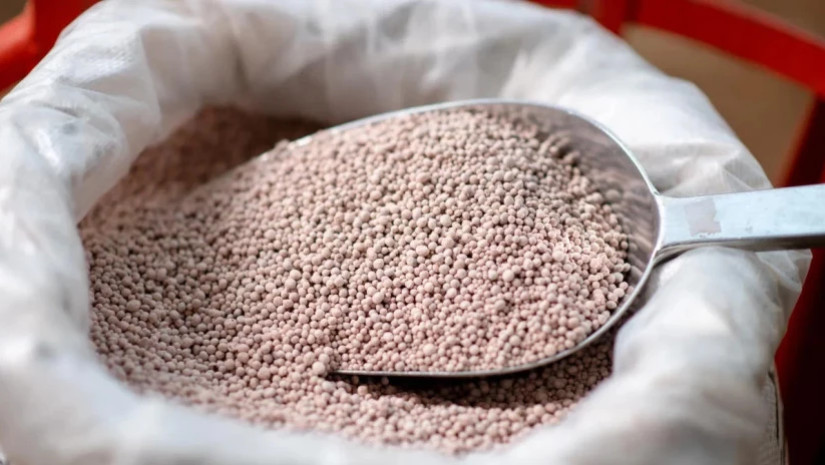
Europe is voluntarily tightening its belts without Russian fertilizers, but the cost of these savings may be too high for local farmers. The volume of purchases of these products by the European Union in the second half of 2025 fell by about 70% compared to the first. As the Russian permanent mission to the EU told Izvestia, such a sharp collapse was the result of the introduction of protective duties by Brussels. At the same time, the sanctions policy has already hit farmers.: the cost of nitrogen fertilizers in Germany increased by 10%. In the future, the pressure on European agriculture will only increase due to competition with the Latin American MERCOSUR bloc and the launch of a new CBAM environmental tax.
The EU increased duties on Russian fertilizers last year. The main goal is to reduce dependence on trade with the Russian Federation. Since the middle of 2025, in addition to the base ad valorem rate (calculated as a percentage of the cost) of 6.5%, specific rates of €40 per 1 ton for nitrogen fertilizers and €45 per 1 ton for complex fertilizers have been added.
— Starting from July 2025, there has been a significant reduction in imports of Russian fertilizers. It should be noted that their share in the total volume of fertilizer supplies to the EU has increased from 22% to 24% since the beginning of 2022, as of September 2025, the Russian permanent Mission to the EU told Izvestia.