

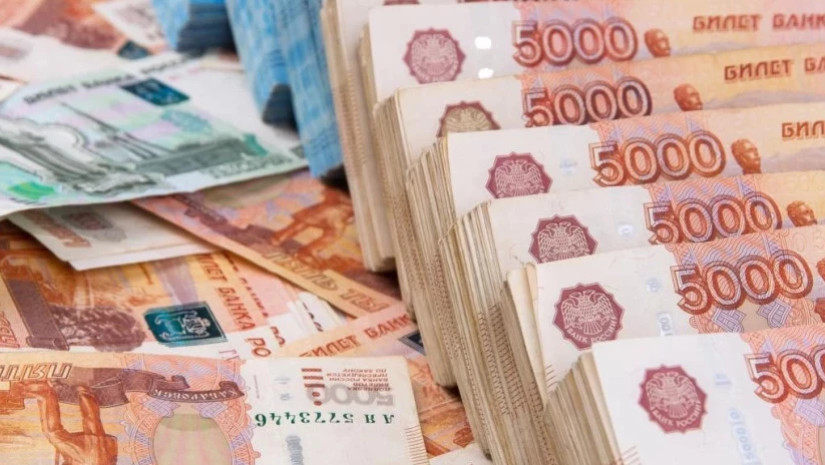
Funds held by Russian households in banks fell by 107 billion rubles, about $1.27 billion, in August, marking the biggest outflow since the autumn of 2022, according to Russian central bank data cited by The Moscow Times on Sept. 22.
The paper said balances on individuals’ bank accounts shrank by 0.2% during the month. Officially, the decline “may be linked to spending typical for this month on vacations and preparations for the school year,” the report noted.
Growth in deposits usually slows in the summer, but in August of last year household balances still increased by 70 billion rubles, roughly $833 million, according to the central bank.
This year’s outflow is the largest since the fall of 2022, when many Russians fled the country after a conscription campaign was announced and withdrew savings as they left. In September 2022, household funds in banks dropped by 458 billion rubles, about $5.45 billion, and in October by another 98 billion rubles, or $1.17 billion.
January is usually an exception, because people spend salaries and pensions paid in December ahead of long holidays. A similar pattern occurred in May this year, when household funds in banks fell by 550 billion rubles, or about $6.54 billion. After pensions and benefits were paid in April, balances had grown by 1.1 trillion rubles, roughly $13.08 billion, only for part of that money to be spent the following month.
Recently, the overall growth of deposits has slowed sharply. On an annual basis it decelerated to 9.2% in August, down from more than 20% in 2024 and the first half of 2025.
The report said Russians now have fewer opportunities to put money into banks. Wage and income growth has slowed markedly: in the first half of the year, real disposable incomes were only 1.5% higher than a year earlier, compared with 8.2% and 7.4% growth in the previous two years.
According to a poll by the Public Opinion Foundation (FOM), 25% of respondents said their financial situation had worsened in recent months. A year ago, 25% said their financial condition was good and 16% called it bad. Now the ratio is 22% to 20%, while in August the two figures were equal at 22%.
At the same time, Russians have growing reasons to pull money from bank accounts. Problems with cashless payments caused by constant internet outages, as well as part of the business sector moving into the shadow economy because of higher taxes, have sharply increased demand for cash.
The amount of cash in circulation has been rising by hundreds of billions of rubles every month. From February through July it grew by nearly 3 trillion rubles, about $35.69 billion. The regulator expects it to increase by more than another 3 trillion rubles by the end of next year.
Russians have also become noticeably more tolerant of envelope wages, and in August they named cash as the best way to store savings for the first time since 2022, the report said.
Savings have also become less attractive. Savings rates fell along with the key policy rate, which has dropped by one-third from its peak of 21% to 14%.
The central bank has said that part of savings is shifting from savings into other financial instruments and into real estate. In the second quarter, according to its estimates, Russians put a record 1.1 trillion rubles, or $13.08 billion, into brokerage accounts.