


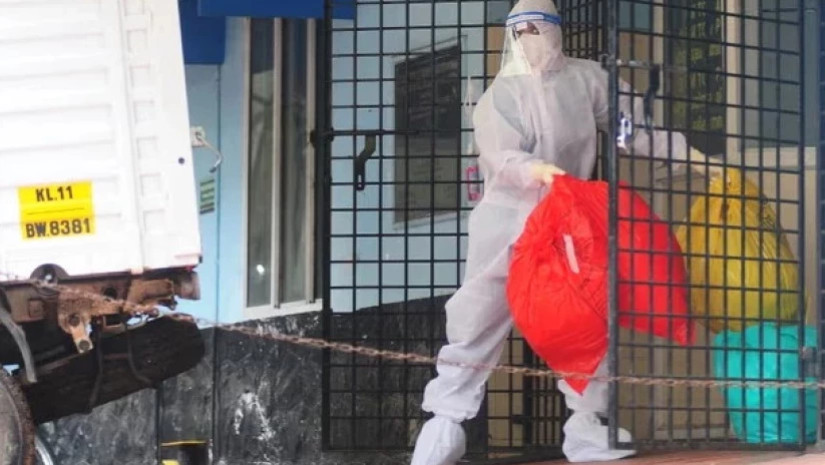
Rare but serious bat-borne virus that can cause fever, vomiting and respiratory infections in humans has killed two in Kerala
Indian authorities have instituted mass testing to halt the spread of the deadly Nipah virus, which has killed two people in the southern state of Kerala.
Public gatherings were curbed and some schools were shut last week, officials said on Thursday. It is the fourth outbreak in the region since 2018.
The first Nipah outbreak was recorded in 1998 after the virus spread among pig farmers in Malaysia and Singapore. The virus is named after the village where it was discovered.
It is able to infect humans directly through contact with the bodily fluids of infected bats and pigs, with some documented cases of transmission among humans.
Flying foxes are the natural carriers of the virus. “It’s carried by fruit bats who sit in the tops of trees,” said Joanne Macdonald, an associate professor of molecular engineering at the University of the Sunshine Coast. “They can urinate and contaminate fruit, and when people eat that they get the virus and then they get sick.”
“Once you get it, [the only treatments are] rest, hydration, treatment of symptoms.”
Scientists fear a mutated, highly transmissible strain will emerge from bats. Outbreaks are rare but Nipah has been listed by the WHO as one of several diseases deserving of priority research for their potential to cause a global epidemic, alongside Ebola, Zika and Covid-19.
Nipah is a type of Henipavirus, and is related to Hendra virus, which was first discovered in Australia and has caused deaths in humans and horses.
Nipah is a rare but serious bat-borne virus that can cause fever, vomiting and respiratory infections in humans. Severe cases can involve seizures and encephalitis – inflammation of the brain – and result in a coma.
The virus has a fatality rate between 40-75%, according to the World Health Organization (WHO). It has no known vaccine, and the usual treatment is to provide supportive care.