

China’s consumer and producer prices fell together for the first time since 2020, a deflation cycle that could give global central banks some help in fighting inflation in their own countries but signals a worsening outlook in the world’s second-largest economy.
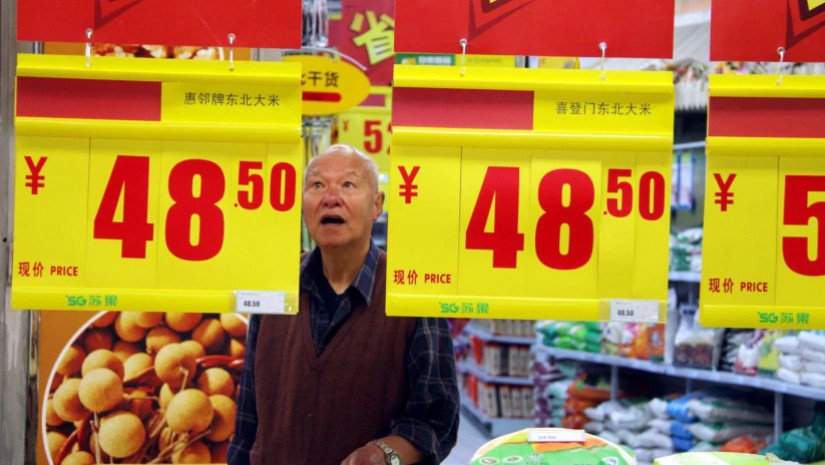
The consumer price index (CPI) registered its first decline in more than two years, falling 0.3 per cent in July from a year earlier, the National Bureau of Statistics (NBS) said Aug. 9. Producer prices fell for a 10th consecutive month, contracting 4.4 per cent.
Slowing consumer demand in China combined with a property slump as well as rapidly falling exports are pushing manufacturers to cut prices to get rid of excess stock. That could ripple through to developed countries, where central banks like the United States Federal Reserve and Bank of England are still hiking interest rates to tame elevated inflation.
Deflation in China “should help inflation in the U.S. and Europe to moderate,” said Ding Shuang, chief economist for Greater China and North Asia at Standard Chartered PLC.
But with politics in many developed countries becoming more protectionist, not everyone will welcome cheaper Chinese goods into their markets. The European Union’s trade chief this week vowed to press China to reduce its trade surplus with the bloc, earning a rebuke from Beijing, which said the EU’s export restrictions were at fault.
In developed countries “cheap consumer goods from China aren’t looked on as favourably as before,” said Paul Cavey of consultancy East Asia Econ. Emerging markets might welcome lower prices for machinery, but also worry about Chinese competition undercutting their efforts to develop domestic industries, he added.
While deflation will help to bring down some global prices, the impact on inflation rates in developed economies could be limited since imports from China make up a relatively small share of consumer spending compared with locally produced services in those countries.
Economists see China’s falling prices as a warning sign about economic growth, as goods supply continues to outrun demand. And while policymakers have pledged to support the recovery, they’ve signalled they won’t provide stimulus as large as during previous downturns.
“China is in deflation for sure,” Robin Xing, chief China economist at Morgan Stanley, said in an interview with Bloomberg TV. Policymakers “need to accelerate all the government spending, raising government debt and do co-ordinated monetary and fiscal easing, to break this debt deflation trap,” he said.
Deflation could slow China’s economy as falling prices lead consumers to delay purchases of durable goods. For companies, falling prices can reduce investment by increasing debt costs relative to income, a process known as “debt deflation.”
A rise in inflation-adjusted interest rates means there’s scope for China’s central bank to ease monetary policy, including cutting the amount of cash banks need to keep on reserve and increasing lending through state-owned policy banks, said Bruce Pang, head of research and chief economist for greater China at Jones Lang LaSalle Inc.
But several factors will limit the scope of stimulus, according to economists.
First, the outlook for prices is improving. Much of the decline was driven by a high base of comparison from mid-2022 when lockdowns pushed up food prices. Global commodity prices are also down compared to last year.
The lack of large-scale stimulus is why economists are trimming their expectations for GDP growth this year close to China’s official target of around five per cent. Some see that target at risk due to a faster than expected drop in exports and a weakening housing market. Home prices in China have been falling since last year, the first time that’s happened since 2015.
Bloomberg