

On February 18, amendments to Georgia’s Law “On Vine and Wine” were adopted at the first reading, and subsequently at the second reading. The proposed Draft Law introduces several significant changes in the viticulture and winemaking sector, most of which, in our assessment, will increase corruption risks and create additional dangers of arbitrary harassment of small cellars.
The draft law significantly expands the power of the National Wine Agency, which will no longer serve merely as a supervisory body but becomes a market access regulator.
1. Mandatory Consent Will Be Required for Planting Commercial Vineyards
This is the most substantive change in the draft law. A new term is being added to the law: “consent for vineyard planting.”
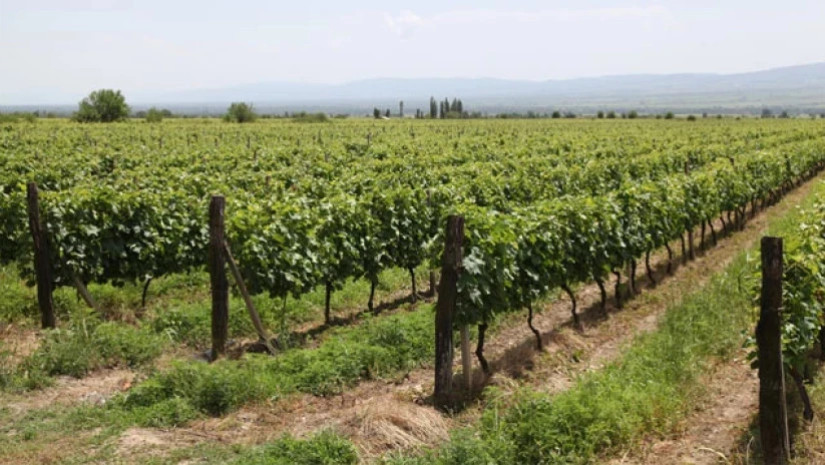
Substance: Planting a commercial vineyard (a vineyard whose harvest is used for commercial purposes) will only be possible on the basis of consent issued by the National Wine Agency.
Current version: Currently, planting a commercial vineyard is unrestricted; only the use of “permitted vine varieties” is mandatory. Under the new version, varietal compliance alone is insufficient — Agency consent is also required.
Risk-Factors:
The law does not establish prerequisites for granting or refusing consent — all criteria are determined by ministerial decree, which is not constrained by the law. The Minister can establish any rules and change them at any time at their discretion.
The law does not establish decision-making procedures, deadlines, transparency obligations, or an appeals mechanism.
The explanatory note states that „consent will be issued free of charge“, but this is not enshrined in the law’s text and can be changed at any time.
2. Obligations for Small Cellars Are Increasing
Substance: Previously, the law exempted producers who produced less than 1,500 liters of wine per year (family cellars) from technological process recording and notification obligations.
Change: Record-keeping and bureaucratic reporting obligations will now apply to everyone, including small, family cellars.
Abolishing the exemption places thousands of family cellars under a bureaucratic burden. They will be required to maintain complex technological records and submit notifications to the Agency. Today, Georgia’s high-quality wine, which has earned the country its reputation, is largely produced by small cellars, and under these circumstances, regulations that burden these small wineries and complicate their competition with large industrial wineries would be illogical and harmful. Furthermore, this increases the risk that the regulatory body will use these obligations as a tool for selective control and harassment of small producers.
3. Blending Rules for Protected wine Wines Are Tightened
Substance: Previously, it was permitted that in the production of wines with a protected designation of origin (e.g., Tsinandali, Mukuzani), up to 15% of grapes could come from other sub-zones or micro-zones.
Result: After the amendment, 100% of grapes must strictly come from the specific designation of origin zone. The 15% exception is abolished.
Although the blending restriction may aim to protect quality, no study was conducted during the draft law’s preparation to determine how many producers might be affected by this restriction and how difficult it would be for them to bring their production into compliance with the new regulations. If some producers have relied on the 15% allowance for years, the new, stricter norm (which enters into force immediately) could become a selective tool for administrative penalties.
Unanswered Questions and Risks
The aforementioned changes raise numerous legitimate and unanswered questions that the draft law’s authors have not addressed:
Non-transparent restriction of an entrepreneur’s fundamental right: Why is an entrepreneur’s fundamental right — to produce and sell a product — being restricted by a permit introduced with such vague objectives, whose issuance criteria, deadlines, appeal procedures, and transparency standards are not established by law at all (not even at a framework level)? When the Agency assumes functions incompatible with international practice and all decisions are entrusted to a minister’s unilateral decree, what anti-corruption mechanism protects us from these non-transparent procedures being used for selective control and harassment of market participants?
Risks for small cellars: What purpose does abolishing the exemption for small, family cellars and mandating complex technological record-keeping serve? Could this disproportionate burden create the risk of driving small producers out of the market or pushing them into the shadow economy?
Risk of imposing fees: If the explanatory note indicates that vineyard planting consent will be issued “free of charge,” why is this crucial provision not directly reflected in the law’s text, in order to prevent the future imposition of additional fees on viticulturists through a ministerial decree?