

Before booking an MRI in Georgia, ask five questions: which scanner will be used, whether contrast is needed, who will interpret the images, when the report will be ready and which files and documents you will receive. These details matter because a useful MRI depends on the right equipment and examination protocol, as well as the radiologist’s interpretation.
If you are comparing clinics in Tbilisi or travelling to Georgia for diagnostic tests, knowing what to ask can help you choose the right clinic. It can also help ensure your results are useful for your next consultation.
1. Which scanner will be used for your MRI in Georgia?
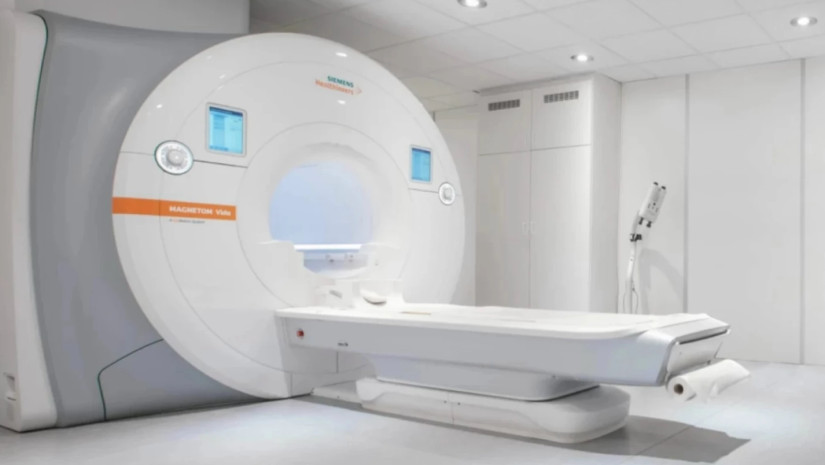
MRI scanners operate at different magnetic field strengths, measured in Tesla (T). A 3T scanner can provide a stronger signal and finer detail for certain examinations. However, higher field strength does not automatically mean better results for every patient or condition. A 1.5T scanner can be well suited to many clinical questions. The appropriate choice depends on the body area, the clinical indication and the examination protocol.
Todua Clinic has extensive experience in radiology, both in clinical practice and in the development of radiology education in Georgia. With six MRI scanners operating at different magnetic field strengths, the clinic has the largest MRI capacity in the country. The clinic uses six Siemens scanners: four operating at 3T and two at 1.5T. These include Magnetom Vida, Skyra, Skyra fit and Lumina (3T), as well as Aera and Avanto Fit (1.5T).
Comfort is another practical consideration. The clinic’s scanners feature wide, short tunnels and Mood Light illumination, which can make the experience less stressful for patients who feel anxious in enclosed spaces.
For more details on MRI in Tbilisi, Vera branch, and MRI at the Dighomi branch, visit Todua Clinic’s website.
2. Will you need an MRI with contrast?
Contrast-enhanced MRI uses a gadolinium-based agent to make certain blood vessels, tissues and abnormal areas more visible. Doctors may request it when evaluating tumours, inflammation or vascular abnormalities. Contrast is not necessary for every MRI; the decision depends on the clinical indication.
Breast MRI is a specific case: it is performed with contrast, including when used to investigate breast cancer in patients at increased risk. For patients of reproductive age, it is generally preferable to schedule the examination between days 7 and 14 of the menstrual cycle.
Gadolinium-based contrast does not contain iodine, and allergic reactions are rare. Still, tell the medical team about previous reactions to contrast agents, kidney disease, pregnancy or the possibility of pregnancy before the scan.
Bring your referral, previous MRI or other imaging results, and any relevant test results. These records can help the radiologist compare findings and assess changes over time. If you are unsure whether a different imaging method may be appropriate, read more about ultrasound diagnostics and X-ray cost, while following your referring doctor's advice.
3. Who will read your MRI in Georgia?
The scanner produces images, but a radiologist interprets them. Experience with the body area being examined can be particularly important when findings are subtle or the case is complex.
Ask whether the radiologist regularly works with the relevant type of examination, such as brain, musculoskeletal, abdominal or pelvic MRI. At Todua Clinic’s Dighomi branch, the radiology team includes Ekaterine Rukhadze and Lela Malania.
The report should be considered alongside your symptoms, medical history and other test results. An imaging finding does not always explain a patient's symptoms on its own, so the referring doctor may need to discuss the results with the radiologist. This is part of why an accurate diagnosis matters.
4. How long will the MRI report take?
At Todua Clinic, the report is issued in an average of three days. Ask about the expected MRI report time when booking, particularly if you have a follow-up consultation or are travelling soon after the examination.
The report is not simply an automatic output from the scanner. The radiologist needs to review the images, assess relevant findings and prepare a written interpretation. If you have a deadline, explain it to the clinic in advance rather than assuming the report will be ready immediately.
5. What can you take with you?
If you plan to consult a doctor abroad, ask for a digital copy of the images in DICOM format, as well as the written report. DICOM files preserve the diagnostic images in a format that can be reviewed using compatible medical imaging software. A few printed images cannot replace the full study.
Check the language of the report before leaving. If your next doctor does not read Georgian, ask whether an English report is available and whether translation needs to be arranged separately. Keep the report and image files together, and confirm how they can be securely shared with another medical facility.
For anyone having an MRI in Georgia as part of an ongoing course of treatment, these details can prevent unnecessary delays when another specialist needs to review the findings.
What does an MRI cost in Georgia?
The MRI price in Tbilisi depends on the body area, the examination protocol and whether contrast is required. When comparing providers, check what the quoted price includes: the scan itself, contrast material if needed, the radiologist’s report and a digital copy of the images.
For the current price of a specific examination, use Todua AI rather than relying on a general estimate. If you have international or private health insurance, contact your insurer before booking to confirm coverage, pre-authorisation requirements and whether payment is made directly or reimbursed later. Ask which documents you will need to submit a claim. You can book an appointment with Todua Clinic to schedule your MRI scan.