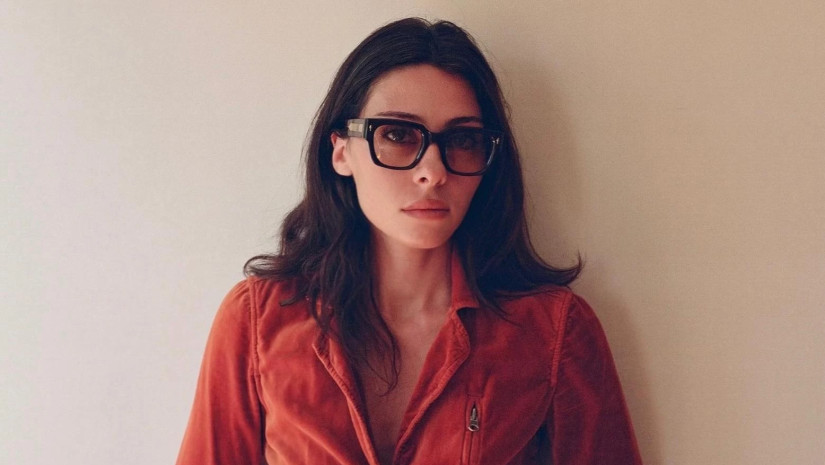
For designer Natalie Shurgaia, design is not simply about creating beautiful objects or interiors. It is about understanding materials, exploring cultural references and transforming ideas into tangible forms through craftsmanship and experimentation. Moving between the worlds of art, furniture and interior design, Shurgaia is developing a distinctive creative practice shaped by her Georgian heritage and international experience in London.
Her relationship with art and design began long before she entered the professional world. Growing up surrounded by the sculptures, drawings and collections of her grandfather, a Soviet-era graphic artist and designer, she developed an early fascination with objects and their histories. Her upbringing between different cultural environments also influenced the way she understands materials, spaces and visual expression.
At just 18, she held her first exhibition, experimenting across painting, sculpture, installation and clothing. She later founded Sugr Studios, a brand exploring the relationship between art and skateboards, before moving towards her own collection of design objects. Gradually, her interests expanded beyond the object itself to the processes, techniques and craftsmanship involved in bringing an idea to life.
An important turning point came when she joined Peter Mikic Studio in London, an internationally recognised design practice working across high-end residential, hospitality and commercial interiors. There, Shurgaia became involved in the development of international projects, focusing particularly on furniture, fixtures and equipment (FF&E), bespoke furniture, material research and the technical details that define an interior.
Working alongside experienced designers, manufacturers and artisans gave her a deeper understanding of what distinguishes an ambitious concept from an exceptionally executed design.
“I didn’t simply want to design an object. I wanted to understand how it was constructed, how materials behaved and what separated an interesting concept from something exceptionally well executed,” she explains.
Her experience at Peter Mikic Studio has also offered insight into the expectations and complexity of the international luxury design market. Among the studio's notable projects is Faena New York, its first hotel project, which involved translating the distinctive identity of the Faena brand into a New York setting.
For Shurgaia, high-end design is not defined by visual impact or expensive materials alone. It requires a highly individual approach, extensive research and close collaboration with specialists. From developing design presentations and sourcing unusual materials to working with manufacturers and resolving technical details, each stage contributes to the final result.
“The distinction between an interesting concept and an exceptional interior often lies in the quality of those decisions and the care taken to realise them,” she says.
She believes that true luxury is often found in the less visible aspects of a project: the craftsmanship, material testing, prototyping and technical expertise required to create something unique. An antique discovered unexpectedly, for example, may bring more character to a space than an exceptionally expensive decorative object.
“For me, luxury is ultimately about the intelligence with which materials, objects and references are brought together, rather than their individual price tags.”
This philosophy also informs her approach to interior design. Rather than following a recognisable formula, she is interested in creating spaces that respond to their architectural, cultural and geographical surroundings. Local materials, traditional craftsmanship and architectural references can become starting points for unexpected combinations, giving each project its own identity.
From functional objects to collectible sculpture
Alongside her international interior design work, Shurgaia is developing an independent practice focused on collectible furniture and sculptural objects. Her ambition is to create limited-edition pieces that exist somewhere between functional design and sculpture, rather than pursue conventional mass production.
Her current exploration centres on bronze casting, experimental patinas and combinations of materials that challenge conventional perceptions of their physical properties.
The process behind one of her developing sculptures illustrates the level of technical precision involved. It begins with a hand-sculpted clay original, which is used to create a mould and produce a wax replica. The wax is then refined before entering the traditional lost-wax casting process, resulting in a bronze form. The final stages involve extensive finishing, including hand-applied patinas and the polishing of selected raised details. She is also exploring the integration of Murano glass into cavities within the sculpture.
Each stage requires experimentation and collaboration with highly specialised craftspeople. For Shurgaia, the technical process is not separate from the creative idea but an essential part of its realisation.
“The quality of execution is inseparable from the original idea,” she says.
Her approach is deliberately considered: she intends to establish a carefully developed collection before expanding, with plans to collaborate with specialist foundries and artisans and eventually present her work through selected galleries, international design exhibitions and private commissions.
A contemporary interpretation of Georgian heritage
Georgia's cultural heritage is another important source of inspiration in Shurgaia's work, although she is reluctant to translate it into immediately recognisable national motifs.
One of her current sculptural projects began with an interest in the historical Georgian sword and a monument she encountered in Georgia. Rather than reproduce a historical object, she sought to capture its strength and sculptural presence in a contemporary form. Developed over several years through drawings, wax and clay, the concept has evolved into an object that can also function as a candlestick holder.
“I don’t necessarily want my work to be identified through an explicitly Georgian aesthetic. My heritage is already part of how I see the world, and I find that more meaningful than trying to illustrate it literally,” she explains.
She sees considerable potential in Georgia's traditions of metalwork, textiles, ceramics and decorative arts, particularly when these are approached as living sources of knowledge rather than simply visual references.
Shurgaia is interested in developing collaborations with Georgian artisans, creating opportunities for genuine exchanges of expertise and experimentation. For her, cultural heritage should contribute to the evolution of contemporary design rather than serve merely as a commercial distinction.
Her experience in London has further strengthened this perspective. Working with international teams and specialist manufacturers has exposed her to different approaches to design and craftsmanship, while reinforcing the importance of cultural exchange.
She believes Georgian designers have an opportunity to bring their country's creative traditions into an international context while developing individual artistic voices. As she puts it, “Cultural identity can be a wonderful starting point, but what ultimately makes someone's work compelling is the originality of their perspective.”
Craftsmanship, technology and the value of longevity
In an industry increasingly influenced by digital tools and rapidly circulating visual trends, Shurgaia is particularly interested in the relationship between technological innovation and traditional craftsmanship.
While technology has made it easier to generate and communicate design ideas, she believes it has also contributed to a certain visual uniformity. This makes physical experimentation and the knowledge of specialist craftspeople even more valuable.
“The more sophisticated our digital tools become, the more I value physical experimentation and the knowledge held by specialist craftspeople,” she says.
She also approaches sustainability through the idea of longevity. Preserving existing architecture, restoring significant objects and commissioning pieces designed to last are, in her view, meaningful alternatives to interiors driven by short-lived trends.
An interior that remains relevant and valued for decades represents a different approach to design — one based on enduring quality rather than constant visual reinvention.
Building an independent creative practice
Looking ahead, Shurgaia's ambition is to develop an independent design practice that brings together interiors, collectible furniture and sculptural objects. She sees these disciplines not as separate professional directions, but as different scales through which she can explore the same creative ideas.
Her immediate focus is on developing a limited-edition collection and establishing relationships with specialist makers, galleries and collectors. Rather than prioritising rapid expansion, she is interested in finding the right context for each piece and allowing the practice to evolve through collaborations and new material discoveries.
Ultimately, her approach reflects a broader understanding of contemporary design: one in which artistic vision, technical knowledge, cultural awareness and craftsmanship are equally important.
For Natalie Shurgaia, the ambition is not to be confined to a single aesthetic or discipline, but to create work that continues to evolve — moving freely between objects, sculpture and interiors while maintaining a consistent commitment to originality and the integrity of the making process.